Understand the demand
Look at customer questions, search behaviour, and sales conversations. Establish whether buyers already recognise the service category or need help understanding a problem before they consider a solution.
LEAD GENERATION STRATEGYINDONESIA
Some buyers are already searching. Others need a relevant introduction. SAB helps you think through demand, account targeting, and sales readiness before committing to more channels, with practical guidance for B2B businesses in Indonesia.
By SAB · Jakarta
Connecting marketing and sales since 2017.
WHAT YOUR BUSINESS NEEDS
Content, ads, and email can all have a role, but launching them together does not create a strategy. Start with how your buyers discover a problem and evaluate a solution. Then decide which activity should meet that need, what information comes next, and whether your team can handle the resulting conversations.
Look at customer questions, search behaviour, and sales conversations. Establish whether buyers already recognise the service category or need help understanding a problem before they consider a solution.
Use search to meet expressed needs, outreach to approach selected accounts, and useful website content to support evaluation. Explain what each activity contributes rather than treating channels as a checklist.
Choose a specific audience, offer, and assumption to explore. Define what evidence would support continuing or changing the approach, so early activity produces a decision your team can act on.
HOW WE WORK
We work with your team to agree on priorities, deliverables, and how to measure progress.
Gather recurring questions, enquiry sources, and reasons customers chose you. Separate established demand from needs that still require explanation or a different point of entry.
Assess inbound and outbound against account visibility, available content, and team capacity. Identify the channel that can address your most immediate gap.
Choose one segment and offer, then write down the assumption to investigate. Decide what sales feedback and campaign evidence will help assess it.
Review where understanding or momentum breaks down. Decide whether to refine the offer, improve the destination page, change targeting, or strengthen enquiry handling.
 SELECTED SAB WORK
Energy · B2B
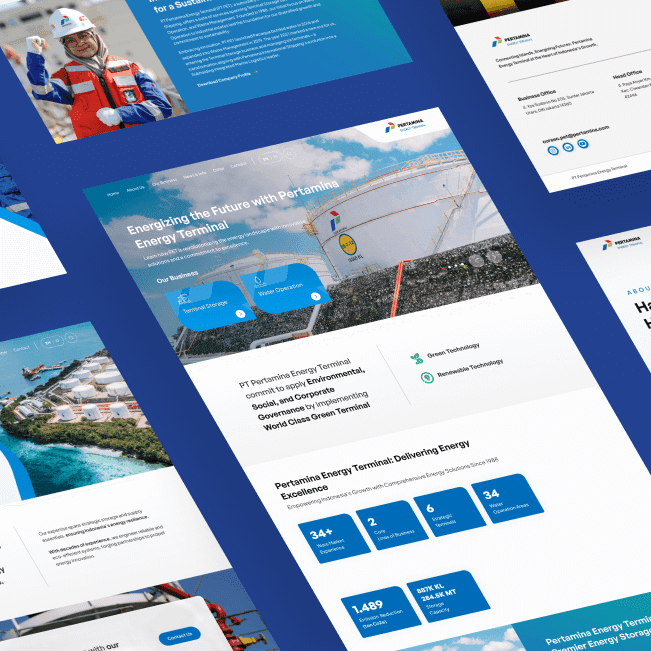
SAB’s work for Pertamina Energy Terminal combined website messaging, cold email, LinkedIn, SEM, and sales materials for international audiences. Each supported a different part of the buying conversation, from introducing the business to explaining its services. When planning your own channels, that relationship is worth defining: what should buyers understand here, and what helps them take the next step?
Explore SAB’s workExplore the project in our company profile, then talk to us about your own brief.
BEFORE WE TALK
Inbound helps people find your business through information or services they are already exploring. Outbound starts contact with selected accounts. Both need a clear offer and useful follow-up. The best starting point depends on buyer behaviour, account visibility, and the resources your team can maintain.
They can serve complementary purposes. Email introduces your business to selected accounts, while useful pages help people research your offer independently. Give each activity its own objective and be careful with attribution: a later search or enquiry does not necessarily belong entirely to the first channel someone encountered.
Start with one clear bottleneck and a route you can support properly. Consider who will prepare the material, review responses, and speak with prospects. Each additional channel creates work. A focused approach with an accountable owner is easier to learn from than several unattended activities.
Reconsider the approach when evidence challenges an important assumption: the accounts are unsuitable, buyers describe a different need, or your team cannot serve the interest received. Set review points in advance. A quiet few days or a competitor’s new campaign is not enough context by itself.
TELL US ABOUT YOUR BUSINESS
Consider demand, account visibility, and available resources before choosing your next activity.